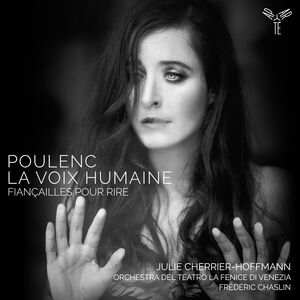
In 1958 Poulenc composed La voix humaine, a one-act opera for soprano and orchestra, based on the monodrama of the same name, written for the Comédie-Française by his friend Jean Cocteau. In this staging of the end of an amorous relationship, we hear only the woman's side of a final telephone conversation with the man who has abandoned her. The orchestra in this innovative work is used not only to unify the composition, but also to reveal what the voice, laid bare by a moving parlé-chanté style, does not say. Fiançailles pour rire and Chemins de l'amour, usually for voice and piano, but presented here in an orchestrated version by one of our finest conductors, Frédéric Chaslin, completes this eloquent rendition of works of a bittersweetness that Poulenc transcends like no other.
19 Poulenc: La Voix Humaine, FP 171 - Sois Tranquille. on Ne Se Suicide Pas Deux Fois
20 Poulenc: La Voix Humaine, FP 171 - Allô !... Allô !... Mon Dieu, Faites Qu'il Redemande
21 Poulenc: La Voix Humaine, FP 171 - Alors, Voilà... J'allais Dire Machinalement : À Tout de Suite
22 Poulenc: Fiançailles Pour Rire, FP 101 (Transc. for Soprano and Orchestra By Frédéric Chaslin): La Dame D'andré
23 Poulenc: Fiançailles Pour Rire, FP 101 (Transc. for Soprano and Orchestra By Frédéric Chaslin): Dans L'herbe
24 Poulenc: Fiançailles Pour Rire, FP 101 (Transc. for Soprano and Orchestra By Frédéric Chaslin): Il Vole
25 Poulenc: Fiançailles Pour Rire, FP 101 (Transc. for Soprano and Orchestra By Frédéric Chaslin): Mon Cadavre Est Doux Comme Un Gant
26 Poulenc: Fiançailles Pour Rire, FP 101 (Transc. for Soprano and Orchestra By Frédéric Chaslin): Violon
27 Poulenc: Fiançailles Pour Rire, FP 101 (Transc. for Soprano and Orchestra By Frédéric Chaslin): Fleurs
In 1958 Poulenc composed La voix humaine, a one-act opera for soprano and orchestra, based on the monodrama of the same name, written for the Comédie-Française by his friend Jean Cocteau. In this staging of the end of an amorous relationship, we hear only the woman's side of a final telephone conversation with the man who has abandoned her. The orchestra in this innovative work is used not only to unify the composition, but also to reveal what the voice, laid bare by a moving parlé-chanté style, does not say. Fiançailles pour rire and Chemins de l'amour, usually for voice and piano, but presented here in an orchestrated version by one of our finest conductors, Frédéric Chaslin, completes this eloquent rendition of works of a bittersweetness that Poulenc transcends like no other.